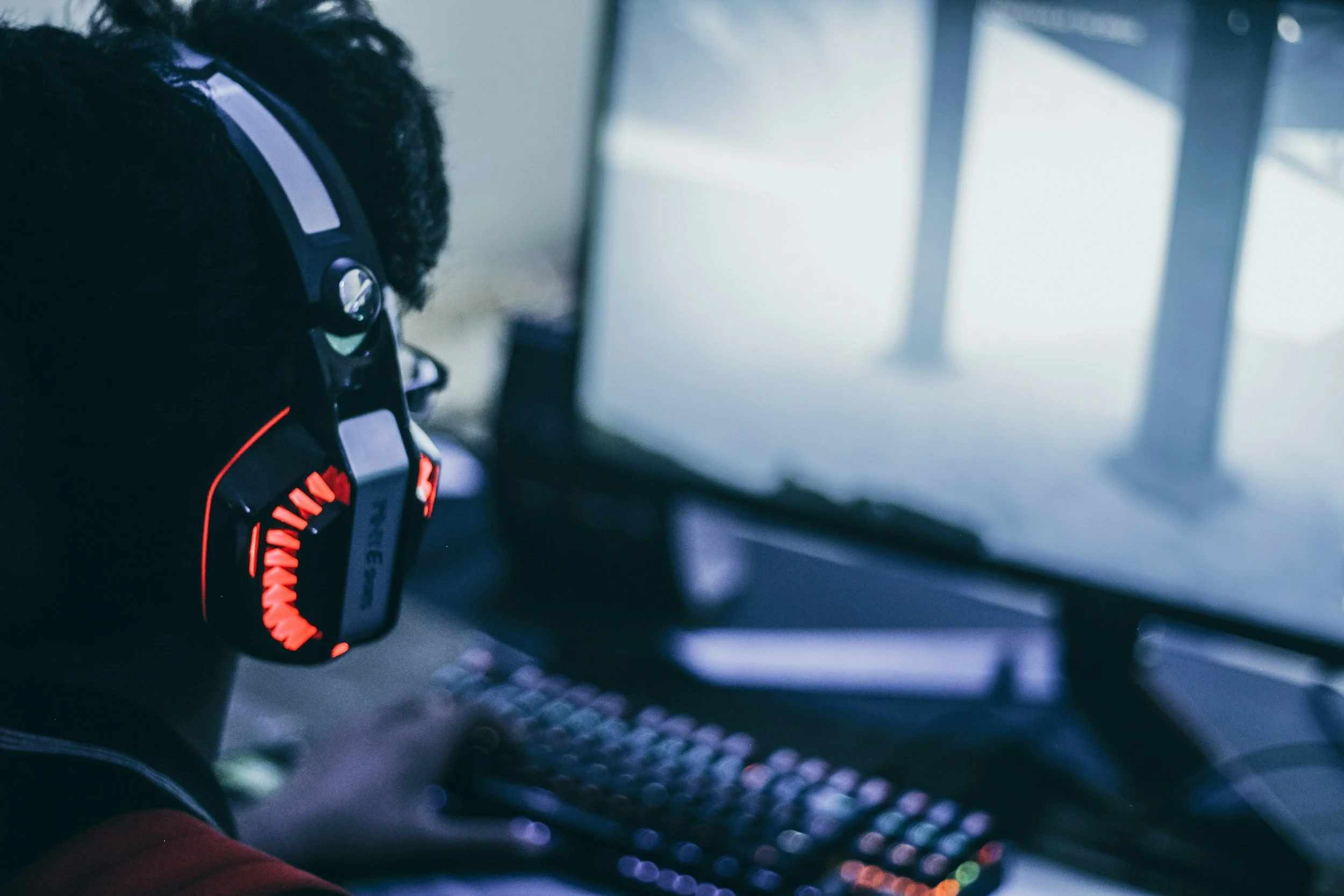
Gaming has become an increasingly common pastime and gamers have emerged as an all-encompassing demographic that sets the foundation for more innovation in how we experience entertainment and storytelling. It is reported that 3.32 billion people are now gamers worldwide, many 16–24-year-olds. It is now among the leading forms of media, including cinema, TV, and music [1]. While there are many benefits such as building relationships and improving critical thinking skills, as previously discussed in our earlier article “Stigma at Play: Games, Gamers, and Prejudgments,” [2] there are also risks that can impair our mental, social, and even economic wellness. To protect ourselves and our youth – who are significantly impacted by these threats – we must promote and foster safe consumption, ensure fair use, and encourage moderation. In this article, we will delve into the risks of overconsumption and what ways to implement better and safer gaming habits.
Across generations, nations, and relations, gaming has a way to connect and transcend beyond the physical space. Through missions, campaigns, and dungeons, gamers will often feel a sense of community that builds comradery and belonging in the form of teams and guilds. Coupled with captivating aesthetic graphics, mixed media, and immersive storytelling–gamers and the games they play are becoming more known where massive gaming events in auditoriums through Esports, and MMOs such as League of Legends and Fortnight, the gaming industry has become a hallmark of our culture worldwide.
So how do we create balance? With the rise of Virtual Realities (VR) and Augmented Realities (AR) in the gaming ecosystem, how can we encourage moderation, especially when it comes to our youth? Financially, how do we mediate the expenses of microtransactions or in other words, in-game purchases, for example? All of these wonderful perks and benefits can, unfortunately, come with a hefty price from the wallets of dedicated gamers and, oftentimes, their unsuspecting parents.
Furthermore, what about preventing a negative impact on relationships? According to one report by the Journal of Behavioral Addictions “...in response to an item about overall relationship harm, the majority (96.3%) of partner respondents reported that their partner was neglecting their relationship responsibilities and most (92.6%) reported experiencing greater tension in their relationship due to excessive gaming [3].”
A healthy approach to understanding the risks and making informed choices involves setting boundaries in our gaming consumption. Engaging in life-balancing habits is the best way to mitigate such risks. Here are just a few ways that can help benefit a gaming-life balance [4].
Create Boundaries: Set time limits and manage play time. Limiting oneself to one or two campaigns, stages, levels, etc. at a time can help set a timeframe of how much to play in a given day.
Manage Physical, Mental, & Financial Health: Pay attention to factors such as exercise, rest, and a healthy diet, mental breaks such as meditation, breathwork, etc. Budgeting how much to spend on games can help with the impulse to pay for in-game, microtransactions to get to the latest gear or level.
Socialize outside of the Gaming/Digital Space: It is helpful to make friends outside of the gaming communities as well, including seeing people in person.
Engage in Activities & Hobbies Other than Gaming: Having active and creative hobbies, such as active sports and outdoor activities, can help break constant gaming time.
Research Games and Keep Safety in Mind:
Beware of hidden fees and gacha (a style of games that rely on randomized in-game transactions or microtransactions).
Use safeguards like Parental Locks and Two-Step Authentication.
Mature Content: is the player mentally and emotionally mature enough to handle the themes and content?
Protect yourself and your data from online criminals, predators, and cyberbullies.
Manage webcam safety & privacy.
Since gaming addiction is a worldwide concern [5], we must find ways to create and maintain a sense of balance in the lives of gamers. One of the ways that could help both gamers and communities alike is digital literacy. Digital literacy can be a broad definition, but a general meaning is, “The ability to use digital technology, communication tools or networks to locate, evaluate, use and create information [6].” Folks need to facilitate a way to better communicate boundaries between healthy socialization outside of gaming and a mutual understanding of how to integrate gaming activities.
Gaming can be a fun activity for all to enjoy. Depending on player preferences, it can also provide cognitive, motivational, emotional, and social benefits and foster real-world psychosocial benefits that assist in the engagement of real-world simulations (like the Sims and Minecraft). To navigate a healthy game-life balance of safe consumption and fair usage in gaming, it is best to find strategies for having mindful curiosity.
Finally, engaging in the civic discourse around online gaming safety can contribute to crucial dialogue and provide support for gamers’ safety and well-being. Finally, engaging in the civic discourse around online gaming safety can raise awareness, provide support for gamers’ safety and well-being, and further efforts to create safe usage among communities. From pro gamers to casual gamers, finding a healthy middle ground can be a guide to ensure our health, well-being, and safety.
Sources & Resources
[1] Howarth, J. (2024, January 29). How many gamers are there? (new 2024 statistics). Exploding
Topics. https://explodingtopics.com/blog/number-of-gamers#
[2] Barna, R. J. (2024, January 1). Stigma at Play: Games, Gamers, and Prejudgments.
https://www.onourownmd.org/s/website-content/a1Q6e00000CCnlwEAD/stigma-at-play
[3] Szász-Janocha, C., Magann, M., Gold, H., Lindenberg, K., Delfabbro, P., & King, D. L.(2023).
Problem gaming-related harm experienced by partners and parents of individuals with gaming problems and their help-seeking experiences. Journal of behavioral addictions, 12(1), 137–147. https://doi.org/10.1556/2006.2023.00003
[4] Odley, J. (2023, November). 10 ways to keep a healthy gaming life balance. Acer
Corner.https://blog.acer.com/en/discussion/1055/10-ways-to-keep-a-healthy-gaming-life-b
[5] World Health Organization. (2022, October 22). Addictive behaviours: Gaming disorder. World Health Organization.
https://www.who.int/news-room/questions-and-answers/item/addictive-behaviours-gamin
[6] Fletcher, C. (2021, December 21). Understanding the link between Digital Literacy, gaming,
and safety - K-20 blog. CYPHER Learning.
https://www.cypherlearning.com/blog/k-20/understanding-the-link-between-digital-literac